Google Summer of Code 2026 results
Today, we spotlight the projects and results from contributors mentored by Dart and Flutter in Google Summer of Code 2026.
The Google Summer of Code (GSoC) program focuses on engaging new developers worldwide in open source software development. Google sponsors contributors to work with a mentoring open source organization on a 12-week programming project during the summer. Over the past 20 years, more than 20,000 contributors have participated in Google Summer of Code.

This year, Dart and Flutter participated as a mentoring organization in Google Summer of Code for the seventh consecutive year. We received nearly 100 project proposals from prospective participants around the world. Today, we spotlight some of the projects we mentored this summer. The contributors describe their projects in this post.
Add WebSocket and gRPC support to Flutter DevTools Network panel
#By Yash Hosalli
While working with real-time systems, I noticed a gap in the developer experience. Flutter DevTools provides great visibility into HTTP requests, but once a WebSocket connection comes alive, it becomes much harder to see what is actually happening. Frame flow, connection lifecycle, and activity over time can quickly turn into a black box, making real-time debugging frustrating.
Many modern apps rely on WebSockets,
and have little to no visibility for debugging.
This project brings that missing visibility into the existing
Dart and Flutter tooling stack.
I extended dart:io, dart:developer, and the VM Service
to capture lightweight connection-level and frame-level WebSocket data,
following the architecture already established for HTTP profiling.
The goal was to make WebSocket debugging feel familiar
rather than introducing an entirely new profiling workflow.
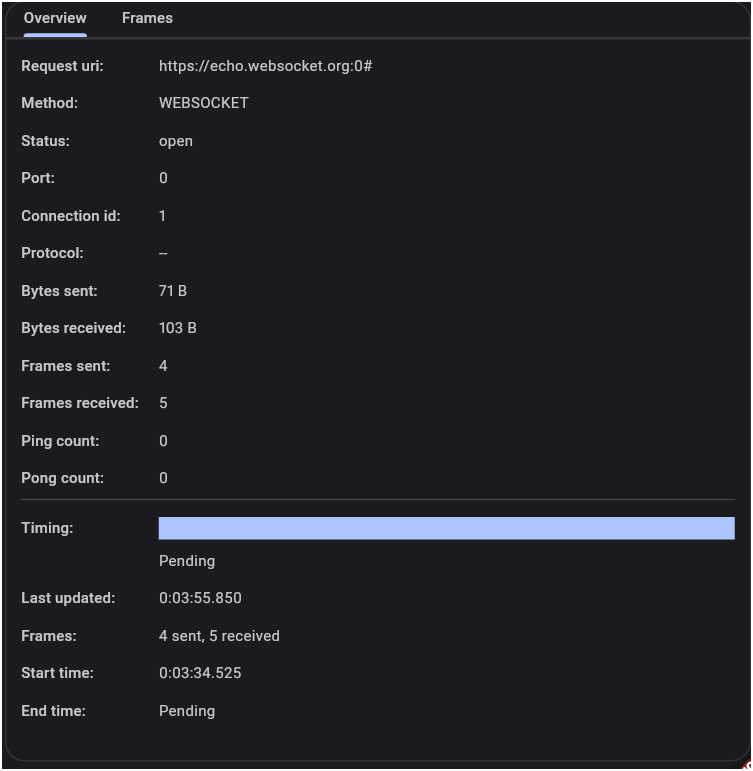
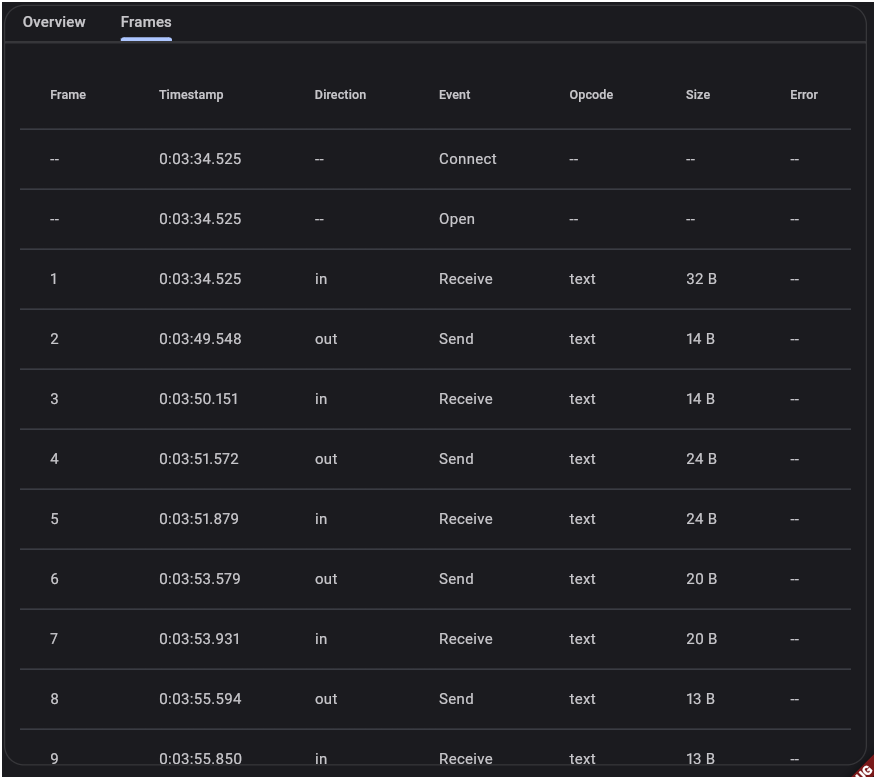
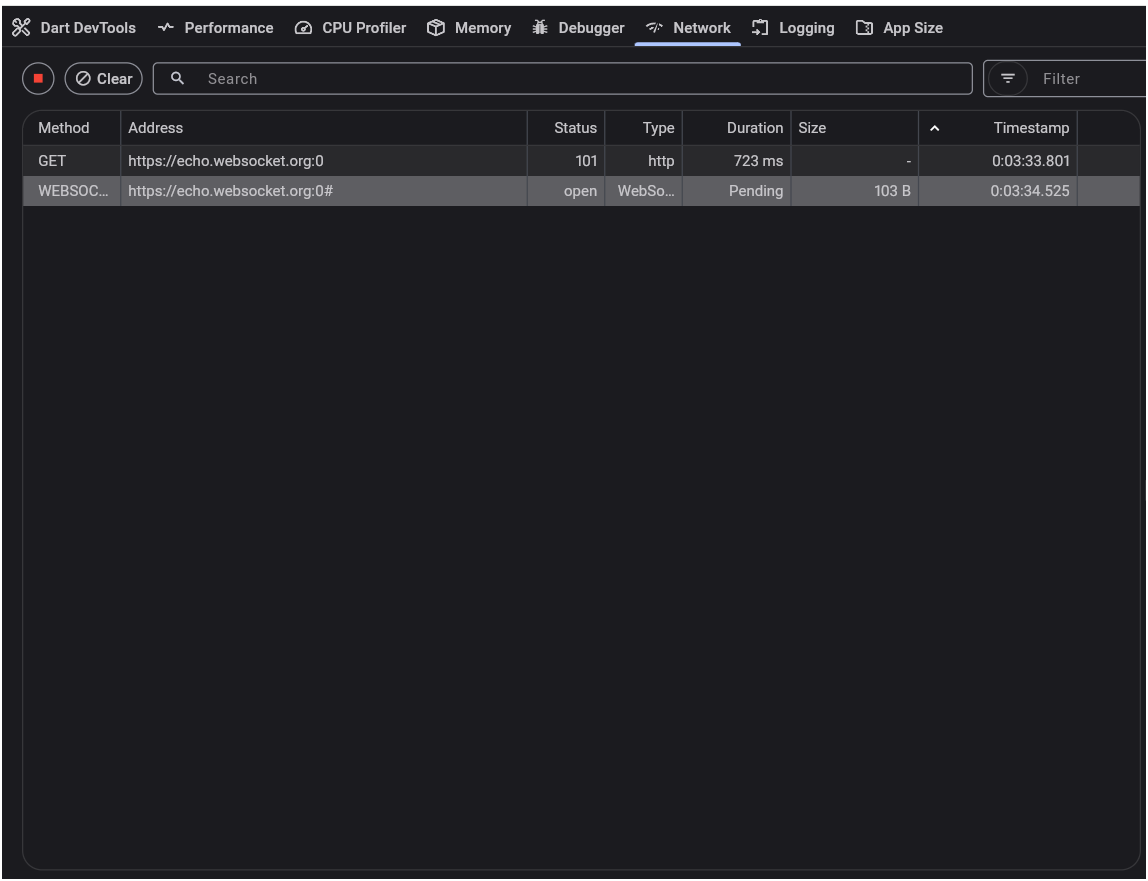
The collected data is then surfaced directly in the DevTools Network panel, where developers can inspect connections, sizes, timestamps, and lifecycle events as they happen. This turns WebSocket communication into something developers can actually observe and understand.
To learn more, check out my GSoC progress tracking page.
C++/C compatibility tool for FFIgen
#By Hassnaa Mohamed Ahmed
The primary goal of this project is to extend package:ffigen
to automatically generate Dart FFI bindings for C++ APIs.
Dart can communicate with C and C-compatible APIs through the FFI package,
and FFIgen can automatically generate Dart bindings for these APIs.
However, C++ introduces concepts that are not directly represented by Dart FFI,
such as classes, constructors and destructors, inheritance,
and native object ownership.
As a result, using C++ libraries from Dart requires additional glue code
and careful handling of the relationship between Dart objects
and their underlying C++ objects.
The experimental C++ support in FFIgen addresses these challenges by generating Dart bindings for C++ classes together with the required C++ glue code. The generated bindings support C++ class pointers and native object lifetime management, allowing Dart objects to interact with their underlying C++ objects while preserving native ownership semantics. This makes it possible to work with C++ classes from Dart without requiring users to manually write the bindings and memory-management layer.
Example C++ header:
class Animal {
public:
  int age;
  Animal(int age);
  ~Animal();
  void speak();
  int getAge() const;
  static int getCount();
};
Generated C++ glue code:
FFIGEN_EXPORT Animal* Animal_new(int age) {
return new Animal(age);
}
FFIGEN_EXPORT int Animal_getAge(const Animal* self) {
return self->getAge();
}
FFIGEN_EXPORT void Animal_delete(Animal* self) {
delete self;
}
Generated Dart binding usage:
// Instantiate the C++ class through the generated constructor wrapper.
final animal = Animal(10);
expect(animal.getAge(), 10);
animal.speak();
// Invoke a static C++ method.
expect(Animal.getCount(), 42);
// Deterministically release the native object.
animal.dispose();
This approach provides a bridge between C++ object-oriented APIs and Dart's FFI model, while keeping the generated bindings as close as possible to the semantics of the original C++ API.
For more details, check out the GSoC 2026 project report on GitHub.
Migrate IntelliJ plugins off Weberknecht WebSocket library
#By Javad Asadi
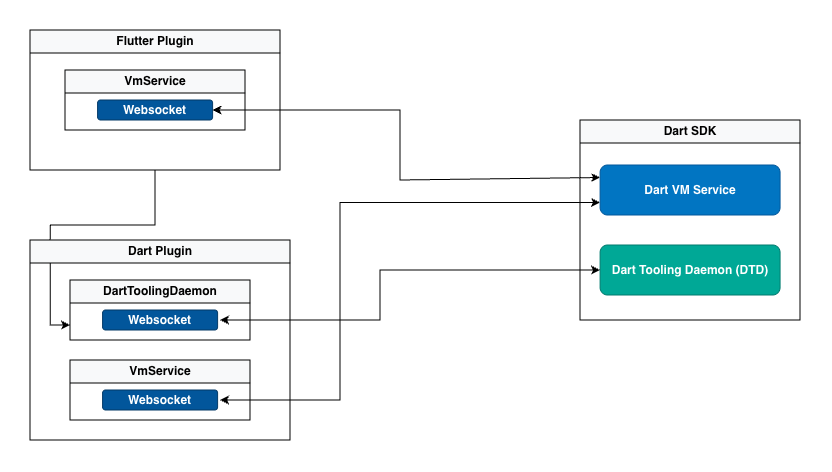
IntelliJ's Dart and Flutter plugins used the Weberknecht library for communicating with the Dart Tooling Daemon and VM service. Weberknecht is an old, unmaintained library and continuing to depend on it was no longer a viable choice.
In GSoC 2026, we decided to replace this library with JDK's built-in WebSocket client. It has been available since Java 11, enabling us to avoid another external dependency.
The migration happened one service at a time, first in the Dart plugin and later in the Flutter plugin. In each phase, I tried to write tests that target the WebSocket on both happy paths and edge cases. The goal was to have the test pass before and after the migration.
The migration was completed successfully. Both the Dart and Flutter plugins now use the JDK's built-in WebSocket client while preserving the existing behavior across all workflows. After the final migration phase, all references to Weberknecht—including its dependencies and bundled JAR files—were removed from both repositories. As a result, the plugins no longer depend on an outdated external WebSocket library.
More information about this project can be found in my project summary gist.
Android JCA backend for package:webcrypto
#By M. Fazri Nizar
package:webcrypto currently ships an additional BoringSSL native library
with Android apps.
During GSoC 2026,
I explored using Android's own cryptography APIs
through Java Cryptography Architecture (JCA) and package:jni instead.
Because Android already provides built-in cryptography,
leveraging it could eventually reduce the extra native code shipped with an app.
The first milestone was getting the SHA-256 primitive working.
After the first primitive was merged, I added HMAC and AES, followed by RSA, elliptic-curve operations, HKDF, and secure random generation. Running the package's existing tests throughout development allowed me to compare the JCA implementation with the BoringSSL and browser backends. Those tests also uncovered differences between providers, especially around AES-GCM parameters and RSA private keys on older Android versions. PBKDF2 remains unresolved because Web Crypto accepts raw password bytes while JCA's standard API accepts characters.
The JCA backend implements the existing interface, meaning the public API remains completely unchanged. As a result, developers will be able to benefit from reduced app sizes without changing any of their code.
To learn more about the implementation and ongoing work, check out my GSoC 2026 project report on GitHub.
Inspect native memory in Dart DevTools
#By Nourhan H.
When debugging Dart code involving Pointer<X>,
the debugger often displays unhelpful and vague information.
This forces developers to rely on print statements
instead of inspecting variables directly.
For example, given the following code:
import 'dart:ffi';
import 'package:ffi/ffi.dart';
final class MyStruct extends Struct {
@Int32()
external int a;
@Double()
external double b;
}
void main() {
final pInt16 = malloc<Int16>()..value = -500;
final ptr = malloc<MyStruct>();
ptr.ref.a = 42;
ptr.ref.b = 3.14;
malloc.free(ptr);
malloc.free(pInt16);
}
The debugger previously showed:
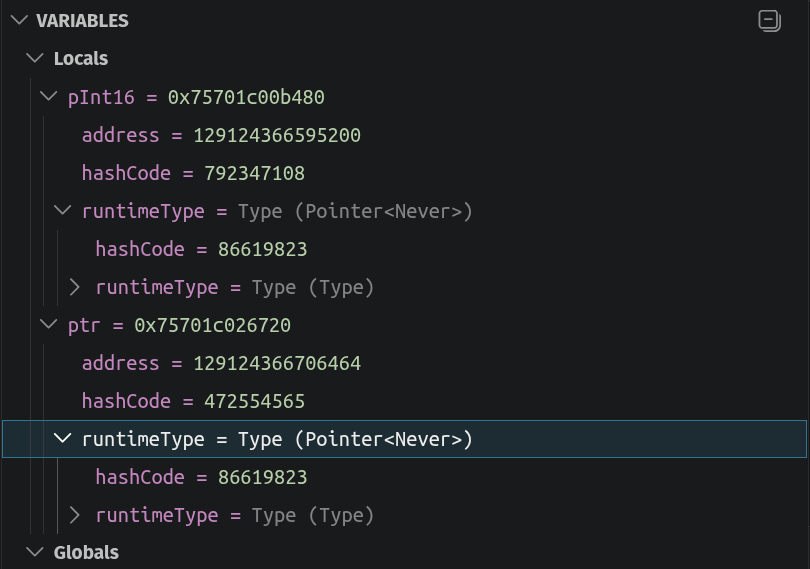
Additionally, attempting to inspect a pointer to invalid memory
previously resulted in segmentation faults,
making memory inspection unsafe.
This issue affected various Pointer<X> types,
including primitive types, structs, unions, and more.
We resolved this issue to make memory inspection both safe and developer-friendly.
For instance, consider inspecting a container with multiple pointer types:
import 'dart:developer';
import 'dart:ffi';
import 'package:ffi/ffi.dart';
class MultiPointerContainer {
final Pointer pInt16;
final Pointer pInt32;
final Pointer pDouble;
final Pointer pNull;
final Pointer pGarbage;
final Pointer pBool;
MultiPointerContainer({
required this.pInt16,
required this.pInt32,
required this.pDouble,
required this.pNull,
required this.pGarbage,
required this.pBool,
});
}
void main() {
final pInt16 = calloc()..value = -500;
final pInt32 = calloc()..value = -100;
final pDouble = calloc()..value = 1.5;
final pGarbage = Pointer.fromAddress(0xDEADBEEF);
final pBool = calloc()..value = true;
final container = MultiPointerContainer(
pInt16: pInt16,
pInt32: pInt32,
pDouble: pDouble,
pNull: nullptr,
pGarbage: pGarbage,
pBool: pBool,
);
debugger();
calloc.free(pInt16);
calloc.free(pInt32);
calloc.free(pDouble);
calloc.free(pGarbage);
calloc.free(pBool);
}
The debugger now displays:
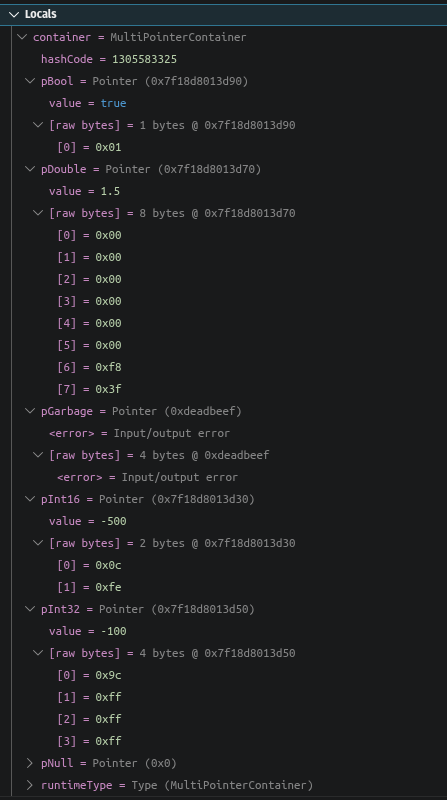
Invalid memory reads and null pointers are now handled completely safely.
We integrated low-level kernel APIs to prevent segmentation faults
during arbitrary memory reads across five major operating systems:
- Linux & Android:
pread64(/proc/self/mem) - Windows:
ReadProcessMemory - macOS & iOS:
mach_vm_read_overwrite
This fix significantly enhances the developer experience for anyone writing Dart code who needs clear, reliable visibility into what happens under the hood when working with pointers.
For more information about the project, check out the GSoC 2026 project repository on GitHub.
More from Dart

Dart in Google Summer of Code 2026
We’re excited to announce that the Dart project will mentor contributors for the seventh time in Google Summer of Code 2026!

Google Summer of Code 2025 Results
The Google Summer of Code (GSoC) program focuses on engaging new developers worldwide with open source software development. Google…
